Posted by Alfiya Yermukasheva
5 February 2026Future Fibres Network+ Final Consortium Meeting
Natural History Museum, Wednesday, 21st January 2026
Written by Despina Djama, University of Plymouth
Key takeaways and reflections from Future Fibres Network+
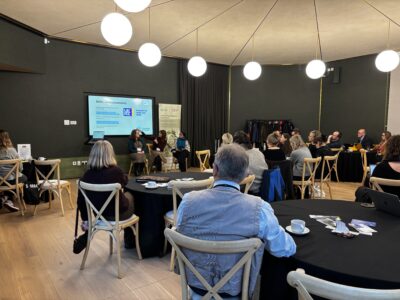
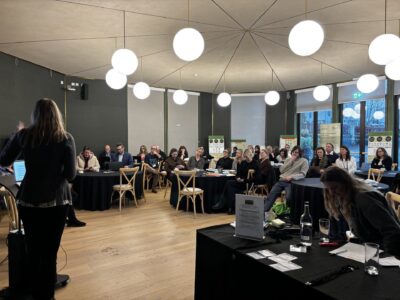
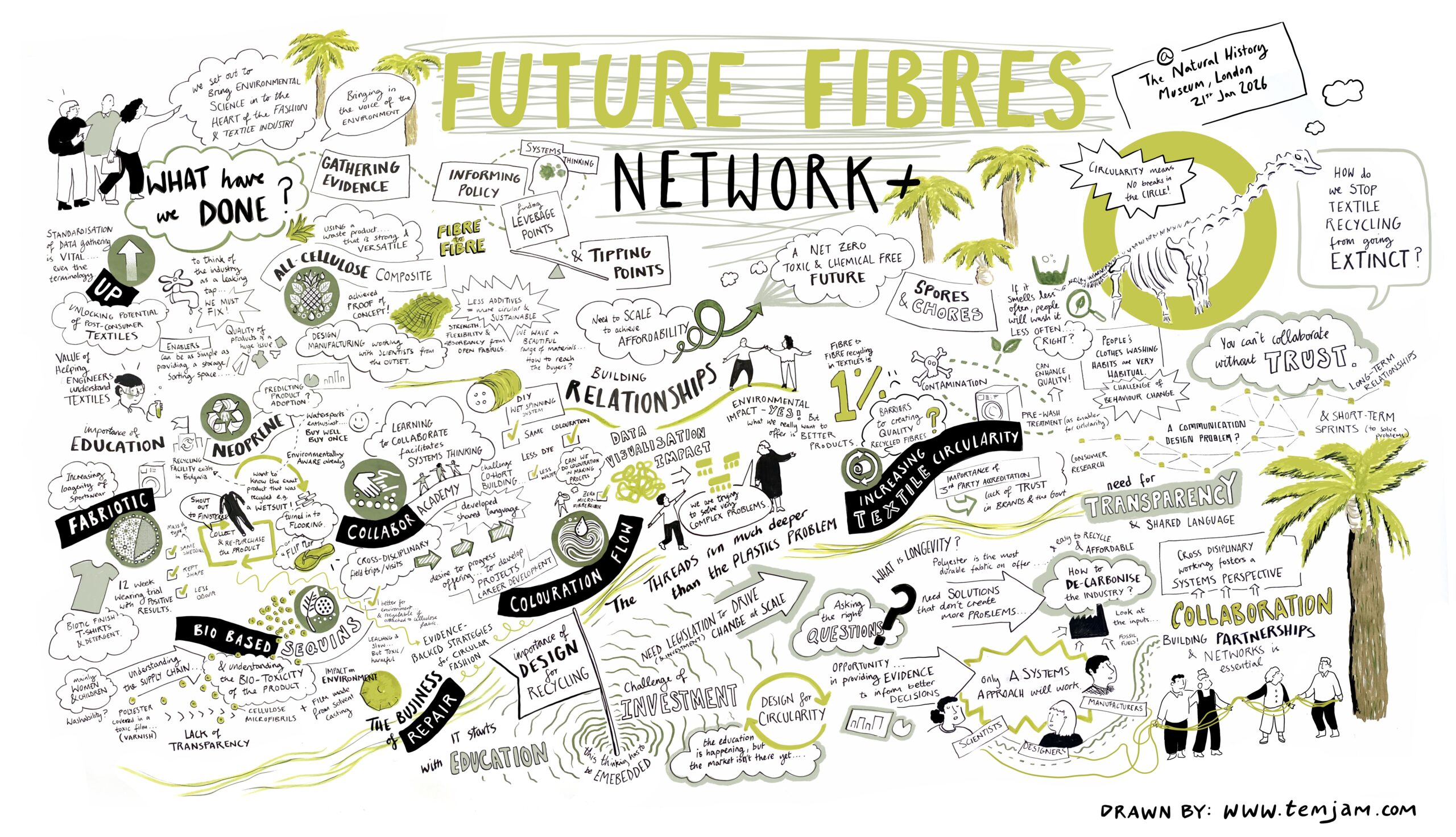
The final consortium meeting for the Future Fibres Network + created a space to showcase the breadth of research and efforts across FFN+ to achieve a more sustainable fashion and textiles sector. In-depth discussions about how we can move the sector forward towards a more sustainable future were a highlight of the event and marked lots of moments for reflecting on progress. Consistent with the meeting’s spirit of collaborative dialogue and discussion, one of the sessions prompted attendees to share their reflections on key messages and recommendations from their experiences with FFN+. The session asked attendees to engage in an activity where they shared their responses to various prompts related to the topic. To foster collective reflection, attendees could see each other’s responses and cast votes on the responses, other than their own, which resonated with them.
Who was there?
Attendees travelled from all over the UK with the majority representing the academic sector and fewer from an industry background. Attendees came from a broad mix of career stages, from early-career professionals to those who brought several years of experience. This created a diverse environment and well-rounded discussions informed by fresh perspectives and seasoned insights. Most attendees felt that the fashion and textile industry has room for improvement in terms of sustainability goals. This showed a shared awareness of the sustainability challenges facing the sector, making this FFN+ meeting an ideal place for professionals in the sector to come together to discuss these challenges.
What is one recommendation or takeaway message from FFN+?
We asked attendees to reflect on one recommendation they would suggest or a key takeaway message from their experiences with FFN+. A cross-disciplinary, collaborative approach and communication across disciplines was a main idea proposed by attendees. They also called for change in policy and the wider system, and advocated for the continuation of work in the sector. The need for standardisation was also a clear winner, as it was the highest voted answer.
What action feels possible as a result of FFN+?
Here each attendee reflected on one action that felt possible as a result of being part of FFN+. This could be something big or small, but realistic and achievable. It could be something that they could start, improve, or stop doing. The responses varied, with collaboration again being a common insight. Some attendees advocated for steps towards commercialisation while others emphasised individual efforts towards sustainability (e.g., clothes recycling, more responsible purchasing of items). Policy recommendations and integration of sustainability into undergraduate curricula were the highest voted answers. Another popular answer was how simple actions can go a long way.
A barrier I now realise I can overcome is…
We used this prompt to capture attendees’ insights into the barriers they feel they can now overcome as a result of having been part of FFN+. The majority of attendees shared that collaboration across disciplines and engagement with industry was the main barrier they were able to overcome.
What does this all mean?
Attendees shared insightful reflections on the key takeaways, actions that are now feasible, and barriers they have overcome from being part of FFN+. A strong theme across all reflections was cross-discipline collaboration. This reflects the efforts of FFN+ to connect researchers, industry professionals, and other stakeholders and the value of bringing diverse voices together to work towards a more sustainable textiles and fashion sector.